Rubbish Clearances London: Recycling and Sustainability Promise
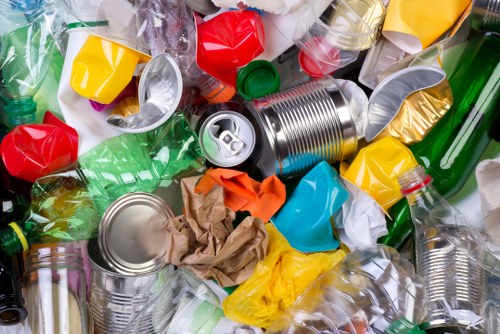 At Rubbish Clearances London we put sustainability at the heart of every removal. Our London rubbish clearance teams combine practical clearance work with a firm commitment to environmental stewardship. Whether you need a one-off bulky waste collection or regular clearance services, our approach emphasises reuse, recycling and reducing landfill. Rubbish Clearances London and our sister teams across the city work with councils, transfer stations and community partners to make every tonne count.
Our formal recycling percentage target is clear: we aim to divert at least 85% of all collected material away from landfill and into recycling or reuse streams. This recycling percentage target is monitored through careful sorting, destination tracking and regular reporting. Each job carried out by our rubbish clearance services in London is logged so we can show what proportion of material was donated, recycled, composted or sent for energy recovery.
 We use a network of local transfer stations and recycling facilities across boroughs to maximise capture rates and minimise transport miles. In practical terms that means working with council transfer stations, private MRFs and facilities such as Edmonton EcoPark and other borough-level sites to ensure waste is taken to the right place. The team aligns with each borough’s approach to waste separation — for example, where a council runs separate collections for food waste, glass, paper and mixed recycling we support that segregation at source.
Giving items a second life is a priority. We operate formal partnerships with local charities, community groups and social enterprises to donate reusable furniture, clothes and household items. These charity partnerships include furniture reuse schemes, textile banks and accredited WEEE (Waste Electrical and Electronic Equipment) outlets that can refurbish or safely recycle electronics. By diverting good-quality items to charities we support social value as well as environmental benefit.
 In addition to donations, our teams sort materials into practical streams: metals, wood, plasterboard, plastics, glass, paper, cardboard, textiles and electricals. Typical London recycling activities we support include kerbside food waste consolidation for borough composting, separate glass banks, bulky waste breakdown for timber recovery, and specialist hazardous sorting for paint and solvents. Our reuse-first mindset means functional furniture or appliances are cleaned, tested and offered to charity partners before any recycling is considered.
To make operations greener on the road we deploy a fleet of low-carbon vans and continually expand our electric and hybrid vehicles. Our route optimisation software reduces unnecessary mileage and our drivers follow low-emission driving protocols. Where electric vans are not yet feasible for a given load, we use Euro-6 low-emission diesel vehicles and offset unavoidable emissions through certified schemes. The combined effect of low-carbon vans and smarter logistics reduces the carbon footprint of London rubbish clearance work.
Our transparency commitments include destination reporting and carbon accounting. Customers who use our London rubbish clearance company can request a breakdown of outcomes for items collected, showing percentages recycled, reused and responsibly disposed of. We back this up with documentation from transfer stations and charity partners so every collection contributes to a measurable sustainability outcome.
Practical Recycling Streams We Handle
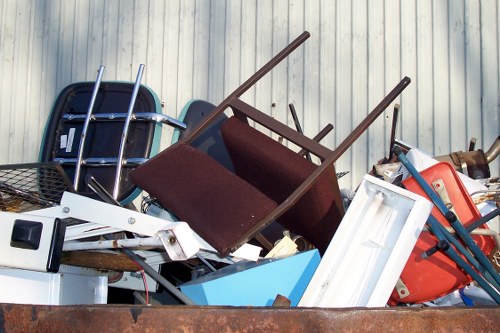 We actively process a wide range of materials and ensure each is sent to the right facility. Common streams include:
- Furniture and household goods – assessed for reuse and offered to community partners;
- Electricals (WEEE) – removed, data-wiped where necessary and passed to licensed refurbishers;
- Textiles – sorted for resale or repurposing through textile banks;
- Metals and mixed recyclables – sent to local MRFs and metal recyclers;
- Green and food waste – consolidated for borough composting or anaerobic digestion where available.
Working with Borough Policies and Local Infrastructure
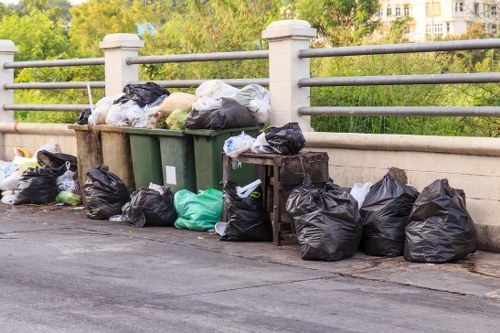 London’s boroughs have varying schemes for waste separation and disposal, and our teams are trained to follow those local rules. In boroughs with separate food waste collections we make sure food waste is kept separate; in areas that require glass banks we transport glass to the designated sites; where bulky waste needs pre-booking with a council we coordinate drop-off to the relevant transfer station. This local sensitivity ensures compliance and improves recycling rates across the city.
Choosing a sustainable rubbish clearance business means selecting a partner that balances operational efficiency with environmental responsibility. Our continuous improvement programme includes annual reviews of our recycling percentage targets, expansion of low-emission vehicles, deeper charity partnerships and investment in staff training. By focusing on reuse-first practices, careful sorting and partnerships with council transfer stations and community organisations, our London rubbish clearance and clearance-for-hire services help keep waste out of landfill and materials circulating in the local economy.
Rubbish Clearances London remains committed to ambitious targets, transparent reporting and on-the-ground actions that deliver measurable results. Whether it’s a one-off clear-out or recurring clearance support, our sustainability promise shapes every decision we make.