Health & Safety Policy for Rubbish Clearances London
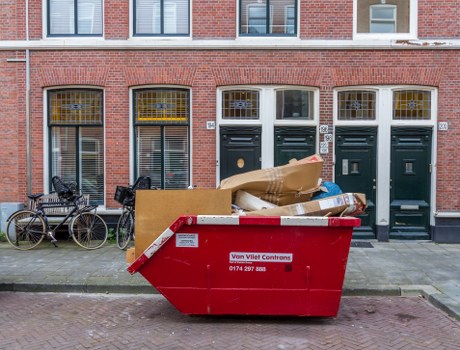 Purpose: This health and safety policy sets out the commitment of our Rubbish Clearances London operation to protect the health, safety and welfare of employees, contractors and the public. It applies to all aspects of rubbish clearance and waste removal London activities, including domestic and commercial clearances, vehicle loading and site clearance tasks. The policy aims to reduce harm through proactive management, sensible planning and ongoing training.
Scope: The policy covers day-to-day operational controls used by our rubbish clearance London teams. It addresses manual handling, safe use of tools and equipment, vehicle safety, hazardous waste identification, personal protective equipment (PPE) and safe working at customer properties or on public land. The rules herein apply to everyone engaged in clearance work and to contractors working under our supervision.
 Responsibilities: Management is responsible for setting policy, providing resources and ensuring that risk assessments are carried out. Supervisors must implement controls, check compliance and support staff. Individual workers are expected to follow safe systems, use PPE correctly and report hazards or incidents immediately. Contractors and temporary staff must meet the same standards while working as part of our rubbish clearance services in London teams.
Risk Assessment and Control Measures
We carry out regular risk assessments for all tasks, from lift-and-carry operations to vehicle loading and debris separation. Risk controls follow the hierarchy: eliminate hazards where possible, substitute safer methods, apply engineering or physical controls, implement administrative controls and provide appropriate PPE. Typical controls include using mechanical aids, defining traffic routes, designating safe loading zones and maintaining clear communication on site.
 Training and Competence: All staff receive induction training that covers safe lifting, correct use of hand tools, safe operation of trolleys and sack barrows, and recognition of hazardous materials. Refresher training is provided periodically and when new equipment or methods are introduced. Competence is assessed by supervisors and all workers are encouraged to participate in toolbox talks and near-miss reviews to embed continuous learning within waste removal London operations.
Personal Protective Equipment (PPE): Appropriate PPE is supplied and must be worn as required. This includes gloves suitable for handling mixed waste, high-visibility clothing for roadside work, safety footwear, eye protection and respiratory protection when dust or fumes are present. PPE is maintained, replaced when worn or damaged and stored correctly at the end of each shift to ensure ongoing effectiveness.
Operational Procedures and Incident Management
Safe working procedures are in place for manual handling, use of mobile vehicles, working at heights (e.g., on steps or small platforms), and segregation of recyclable and hazardous items. Workers are instructed on how to identify potential asbestos-containing materials, batteries, electrical equipment, chemicals and sharps. Where hazardous materials are suspected, operations are stopped and further assessment is arranged before continuing.
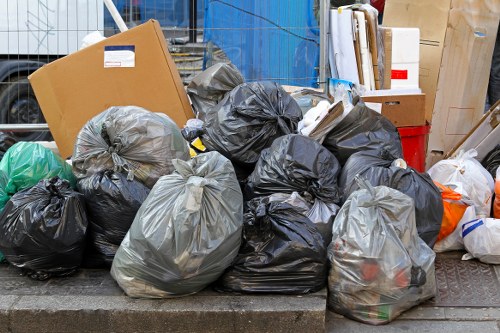 Accident Reporting and Investigation: All incidents, injuries, near misses and dangerous occurrences must be reported promptly. A clear reporting system supports investigation, root cause analysis and the introduction of corrective actions. Records of incidents are reviewed regularly to identify trends and to inform changes in procedures, training or equipment for the benefit of the whole London rubbish clearances team.
 Monitoring and Review: Health and safety performance is monitored through site inspections, audits and regular reviews of risk assessments. Performance indicators include incident frequency, completion of training, PPE compliance and maintenance of equipment. Reviews are used to make improvements, ensure legal compliance and to keep policies aligned with industry best practice. Staff involvement in review processes is encouraged to capture practical insights from daily clearance work.
Waste Segregation and Environmental Considerations: Proper segregation and handling reduce risks to staff and the public. The policy supports segregating recyclables, controlled disposal of hazardous items and avoiding contamination. Employees are trained to identify recyclable materials and to follow established collection, loading and temporary storage protocols. Emphasis is placed on minimising manual handling of heavy items through team lifts or mechanical aids.
Vehicle and Equipment Safety: Vehicles and equipment are inspected before each shift and maintained according to schedules. Load security, weight distribution and safe access to vehicles are part of routine checks. Drivers and loaders share responsibility for safe journeys, including securing loads, avoiding sharp turns or excessive braking and ensuring that vehicles are suitable for the planned tasks.
Commitment to Improvement: This policy is owned by management and communicated to all staff. It will be reviewed at defined intervals and when changes in operations or technology occur. The organisation is committed to continuous improvement, risk reduction and ensuring that our rubbish clearance activities in London are carried out with the highest regard for health, safety and environmental stewardship.
- Key actions: complete risk assessments, provide training, maintain equipment
- Worker duties: follow procedures, wear PPE, report hazards
- Management duties: monitor performance, support improvement, ensure resources
Final note: All personnel are expected to read and understand this policy and to apply it every day. By working together, following safe methods and valuing each other’s welfare, we maintain a safer environment for staff, customers and the public while delivering efficient rubbish clearance and waste removal services.